
Mobile Home Tie Down Systems in Show Low, AZ
OUR SERVICES
Mobile Home Tie-Down Services We Offer
Diagonal Frame Strap Installation
Diagonal frame straps are the most common tie-down type for newer manufactured homes. Each strap runs from a ground anchor on one side of the home at an outward angle up to a bracket welded to the steel chassis rail. The diagonal angle resists both sideways and upward wind forces at the same time. We install galvanized 1-1/4-inch diagonal frame tie-down straps with bolt-on chassis clips rated for 3,150 lb working load. Strap angle from vertical is confirmed on-site using an Empire Level EM81.24 24-inch box level with horizontal and plumb vials, which verifies that each strap runs at the minimum 40-degree angle from vertical required by HUD installation standards before the anchor end is tensioned. All diagonal strap work follows HUD 24 CFR 3285.402 frame tie-down specifications, including maximum spacing intervals and the minimum soil depth for anchor placement at Show Low’s frost-line depth of 18 inches.
Over-the-Roof Strap Installation
Older mobile homes built before 1976 often require over-the-roof straps instead of frame straps. These straps run up one side of the home, over the roofline, and down the other side to ground anchors on each end. They resist the same uplift forces as frame straps but attach at the roof level instead of the chassis. We install over-the-roof strap systems with corrosion-resistant buckle assemblies and foam-padded roof protector brackets at every eave contact point to prevent strap abrasion through the roofing membrane. Before final tensioning, strap load is measured using a Tractel Dynafor LLX1 compact electronic load cell with LCD display, which reads live pounds of tension on each strap leg so we can confirm the correct preload is achieved without over-stressing the roof structure. Over-the-roof strap installation follows HUD 24 CFR 3280.306 anchoring requirements for pre-HUD and early HUD-code manufactured homes, including the roof edge protection and minimum anchor capacity specifications for Wind Zone I conditions in Navajo County.
Vertical Ground Anchor Installation
Vertical ground anchors resist the direct upward pull on a manufactured home during high-wind events. They are used alongside diagonal straps on single-wide homes and at end-wall locations on double-wides where uplift loads are highest. We install driven steel rod anchors with stabilizer plates rated for 4,725 lb vertical pullout in Class 4 or better soil. Anchor depth and pullout capacity in Navajo County’s soil conditions are verified at each location using a Proto J6016C 3/4-inch drive click-type torque wrench calibrated to the manufacturer’s installation torque table, which provides an on-site mechanical confirmation of anchor embedment adequacy before any strap is attached. Vertical anchor placement follows HUD 24 CFR 3285.401 ground anchor spacing requirements, including the maximum 2-foot setback from the home’s end wall and the soil classification table for Navajo County ground conditions.
Helical Pier Anchor Installation
In rocky or dense volcanic soil, standard driven rod anchors cannot reach adequate depth. Helical pier anchors are the right solution. A helical anchor has a screw-flight helix at the bottom that threads into the ground as it spins. This gives it high holding capacity even in the hard, mixed-profile soils found across much of Navajo County. We install 1-1/4-inch square-shaft helical anchors with 8-inch diameter lead helix flights, driven to a torque reading that correlates to the required pullout capacity for your home’s load spec. Anchors are installed using a Chance SS175 Series helical anchor installation torque head with direct drive square socket adapter, which transmits full rotary torque from a hydraulic drive head to the anchor shaft and records installation torque at each inch of depth for the job record. Helical pier anchor installations meet HUD 24 CFR 3285.401 Table to Section 3285.401 soil classification requirements and Arizona Department of Housing anchor type approval criteria for Seismic Zone D1 and Wind Zone I manufactured home sites in Navajo County.
Tie-Down Inspection and Load Testing
Many manufactured home owners in Show Low have a tie-down system that was installed years ago but has never been checked since. Straps corrode. Buckle pins seize. Ground anchors lose torque capacity as soil conditions change through freeze-thaw seasons. A visual check from ground level is not enough to confirm a system is still holding. We inspect every strap for corrosion, kinking, and connector integrity. We check every anchor head for looseness and re-torque any that have backed off. Bolt torque at each anchor cap connection is confirmed using a CDI Torque Products 2503MFRMH 1/2-inch drive flex-head digital torque wrench, which measures actual delivered torque to the fastener and logs each reading for the inspection report. All inspection work documents compliance with HUD 24 CFR 3285.401 and 3285.402 system maintenance requirements and produces a written report suitable for ADOH file review or lender submission.
Tie-Down Re-Certification for Loan or Sale
If you are selling your manufactured home, refinancing it through FHA or VA loan, or updating your homeowner’s insurance policy, you will likely need a tie-down system certification. This means a licensed installer inspects the system and provides a written statement that it meets current HUD installation standards for your home’s wind zone. We carry out the full inspection, document every anchor and strap in writing, and provide a job completion report formatted for submission to the Arizona Department of Housing and to FHA or VA lenders. All anchor heads and buried strap connections are visually documented using a RIDGID micro CA-350 video inspection camera, which reaches down alongside buried anchor shafts to confirm corrosion status and embedment depth without excavation. Re-certification documentation meets the requirements of Arizona Manufactured Housing Division A.R.S. Section 41-4028 and the HUD Permanent Foundations Guide HUD-7584 format commonly required by FHA and VA lending institutions in Navajo County.
Corroded or Failed Strap Replacement
Galvanized tie-down straps have a service life. In the White Mountains, the combination of monsoon-season moisture and winter freezing accelerates corrosion at ground level and at buckle connections. When a strap shows active rust, pinhole corrosion, or a deformed buckle, it must be replaced before the next high-wind season. We remove old straps and buckle hardware without disturbing the anchor. Corroded strap-end hardware and anchor cap connectors are cut away using a Fein AFSC 18-1.6 cordless metal cut-off saw with thin-kerf metal blade, which cuts cleanly through corroded bolt hardware at tight crawl-space clearances without creating sparks near the home’s belly board insulation. All strap replacement work uses new galvanized steel strapping to ASTM A653 G90 zinc coating standard and follows the original home manufacturer’s strap length, angle, and buckle specification as listed in the HUD data plate installation documents.
Wind Zone System Upgrade
Some manufactured homes in the Show Low area were installed with the minimum anchor count for their original site. When the local authority updates the design wind speed requirement, or when a home is moved to a more exposed lot, the existing system may not be enough. We assess the current system against the new site’s wind exposure and calculate how many additional anchors and straps are needed to bring the home into full compliance. New anchor locations are marked and driven using a Metabo KH 28 SDS-Plus rotary hammer with 1-inch spline drive bit for pilot hole drilling at concrete pad footing locations where new anchors must be set adjacent to existing poured footings. Wind zone upgrades are engineered to meet the City of Show Low 90 mph design wind load standard and comply with HUD 24 CFR 3285.402 anchor quantity and spacing requirements for the upgraded site-specific wind exposure classification.
OUR ASSESSMENT PROCESS
How We Assess and Install Your Tie-Down System
Step 1: Data Plate Review
We locate the HUD data plate inside your home. This label lists the wind zone your home was built for and the manufacturer's anchoring specification. This sets the baseline for everything else.
Step 2: Soil Assessment
We probe the soil at the anchor locations. Navajo County has a mix of sandy loam, clay, and rocky volcanic soil. The soil type determines which anchor we use and how deep it needs to go.
Step 3: System Design and Layout
We calculate the number of anchors and straps needed based on your home's length, width, and wind zone specification. We mark anchor positions before driving anything.
Step 4: Installation and Torque Verification
We drive anchors to the minimum torque or depth required for the load rating. Every anchor is logged before we attach straps.
Step 5: Tension Check and Documentation
We tension every strap to the specification, check all connections, and provide you with a written job record of every anchor location and tension reading.
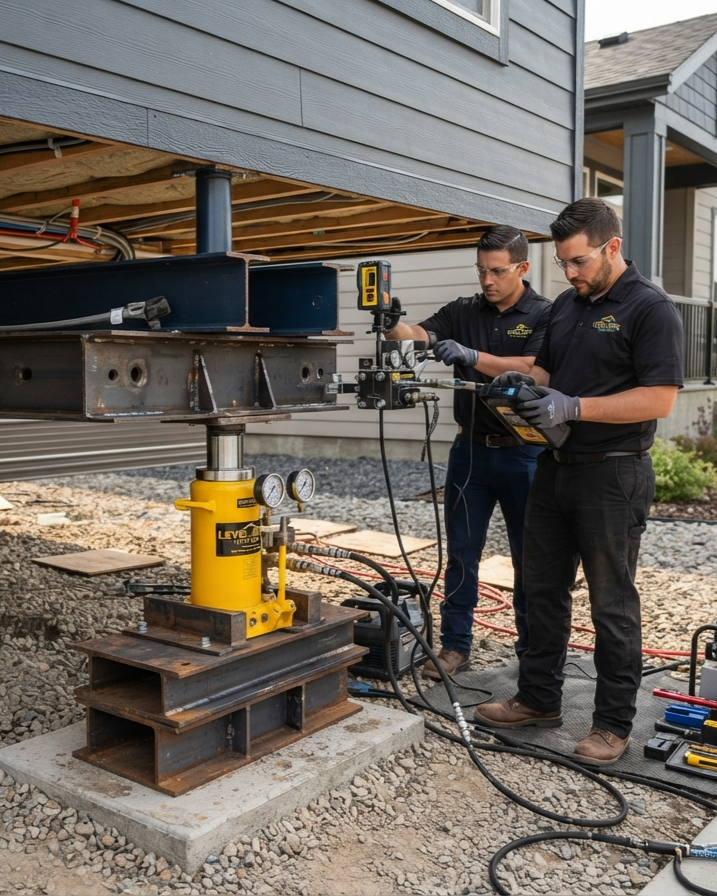
Helical pier anchor installation in hard volcanic Navajo County soil is executed by Show Low Mobile Home Contractors using an 8-inch lead helix driven by a Chance SS175 hydraulic torque head that records installation torque at each inch of depth. That torque log becomes the job record submitted to ADOH for permit closeout. Anchor type approval meets HUD 24 CFR 3285.401 soil classification requirements for Seismic Zone D1 sites in Show Low.
WE SERVE SHOW LOW & white mountains
We Serve Show Low and the White Mountains Region
- Show Low, AZ 85901
- Pinetop-Lakeside, AZ 85929
- Snowflake, AZ 85937
- Taylor, AZ 85939
- Linden, AZ 85901
- Heber-Overgaard, AZ 85928
- Springerville and Eagar, AZ 85938
Not sure if we cover your location? Call us. We serve all of Navajo County and most of Apache County for tie-down work.
Why Show Low Homeowners Choose Us for Tie-Down Work
WE ARE ADOH-LICENSED
Arizona law requires manufactured home tie-down installation to be performed by a licensed installer. We are licensed and listed with the Arizona Department of Housing. Every job includes a permit before the first anchor goes in.
WE KNOW WHITE MOUNTAINS SOIL
Navajo County has some of the most varied soil conditions in Arizona. Rocky basalt, loose sandy loam, and expansive clay can all appear within a few hundred feet of each other. We probe and classify the soil at your specific anchor locations before we choose an anchor type.
WE PROVIDE WRITTEN JOB RECORDS
Every anchor location, torque reading, and strap tension is written down and given to you at job completion. This record is what your lender, insurer, or inspector needs.
WE DO THE FULL SYSTEM
We do not just drive anchors and leave. We tension every strap, check every connector, and confirm the full system is ready before we leave your site.
Get a Free Estimate for Mobile Home Tie-Down in Show Low, AZ
FAQ
Frequently Asked Questions
The fastest check is to look under your home. You should see metal straps running from ground-level anchors up to the frame or over the roof. If you see no straps, loose straps, or heavily rusted hardware, the system needs attention. Call us for a free crawl-space inspection and we will tell you exactly what is there and what condition it is in.
A basic diagonal strap installation on a single-wide with new helical anchors typically runs $800 to $1,800 depending on anchor count and soil conditions. A double-wide full system can run $1,500 to $3,500 or more. We give you a written estimate before any work starts.
Yes. Arizona requires an ADOH installation permit for tie-down system installation and modification. We pull that permit before we start. If your specific site is in the city limits of Show Low, we also coordinate with the City of Show Low Building Safety Department as required.
HUD divides the country into wind zones based on typical wind speeds. Most of Arizona is Wind Zone I, which is designed for 70 mph sustained winds. However, the City of Show Low requires structures to handle 90 mph design wind loads at the local level. Your home’s data plate tells you which wind zone it was built for. If your site exposure requires more than your home’s data plate standard, we calculate and install an upgraded system.
Yes. We inspect your system, document everything in writing, and provide a job completion report. For FHA or VA loan requirements, lenders typically also require a licensed engineer to sign a foundation certification. We can advise you on that process and connect you with Arizona-licensed engineers who do this work in Navajo County.
Galvanized steel strapping typically lasts 10 to 20 years depending on exposure conditions. Ground-level connections corrode faster than straps that run above grade. Homes with compromised skirting that lets moisture under the home see faster strap corrosion. We recommend an inspection every 5 to 7 years or after any major storm event in the White Mountains area.